8 Questions to Ask Before You Enroll in Any Foot Care Nurse Program
It's late. You just came off a twelve-hour shift, you're in bed with your phone, and you're doing the math on your life again. There has to be something else. Then somebody mentions foot care nursing — good money, your own hours, still nursing — and now you're here, comparing programs at midnight.
Quick version of how this works in Ontario, since every program assumes you already know: you need to be an RN or RPN in good standing with the CNO. You take a foot care nurse course — theory plus hands-on clinical days. You get a certificate of course completion. You get liability insurance. Then you can start seeing clients. That's the whole path.
The part that actually decides how it goes is which course you pick.
I get it. I've watched hundreds of nurses do exactly this. And I've watched a lot of them pick wrong — not because they weren't smart, but because they didn't know what to ask. A foot care nurse course in Ontario is a few thousand dollars. That's real money. Before you hand it over, ask these eight questions. Every program. Same questions. Write down the answers and compare them side by side.
That list will tell you more than any website will.
1. What's the finished price, everything from enrollment to working on your own?
This is the big one. The one most programs hope you never ask.
Here's what to watch for. Some programs charge one price for the course and a higher price for the business training. Sometimes it's sold separately. Sometimes it's a more expensive version of the same course. Either way, the lower price doesn't teach you pricing, booking, forms, or how to get clients. All of that lives in the more expensive version. So the advertised price gets you trained. It doesn't get you working.
So don't ask "what does it cost?" Ask this instead: "What will I have paid in total, from my first day to the day I'm working on my own?"
What a good answer sounds like: One number, said plainly up front, that covers everything from enrollment to working on your own. If the business help is included and stays available, even better. You might not need it on day one. But it's there when you do.
Red flags: The business training only comes with the more expensive version. "Most students choose the higher option." If most students need it to start working, it wasn't extra. It was part of the price.
2. Where will I do my clinicals, and how far is that from me?
The clinical is in person. You have to physically get there. So the real question isn't just where. It's how far.
A cheaper course three hours away isn't cheaper once you add gas, parking, and days off work. Ask for the actual address before you enroll. Then map it. If the drive doesn't work for your life, the price doesn't matter.
What a good answer sounds like: A specific address, named before you pay. And honesty about the travel. "Clinicals are here, at this address." If that means a drive for you, they say so upfront.
Red flags: No address until after you've paid. "We have locations everywhere" but the nearest one to you is hours away. Finding out where you're going on the confirmation email.
3. Who teaches the clinical — and how long have they been doing this?
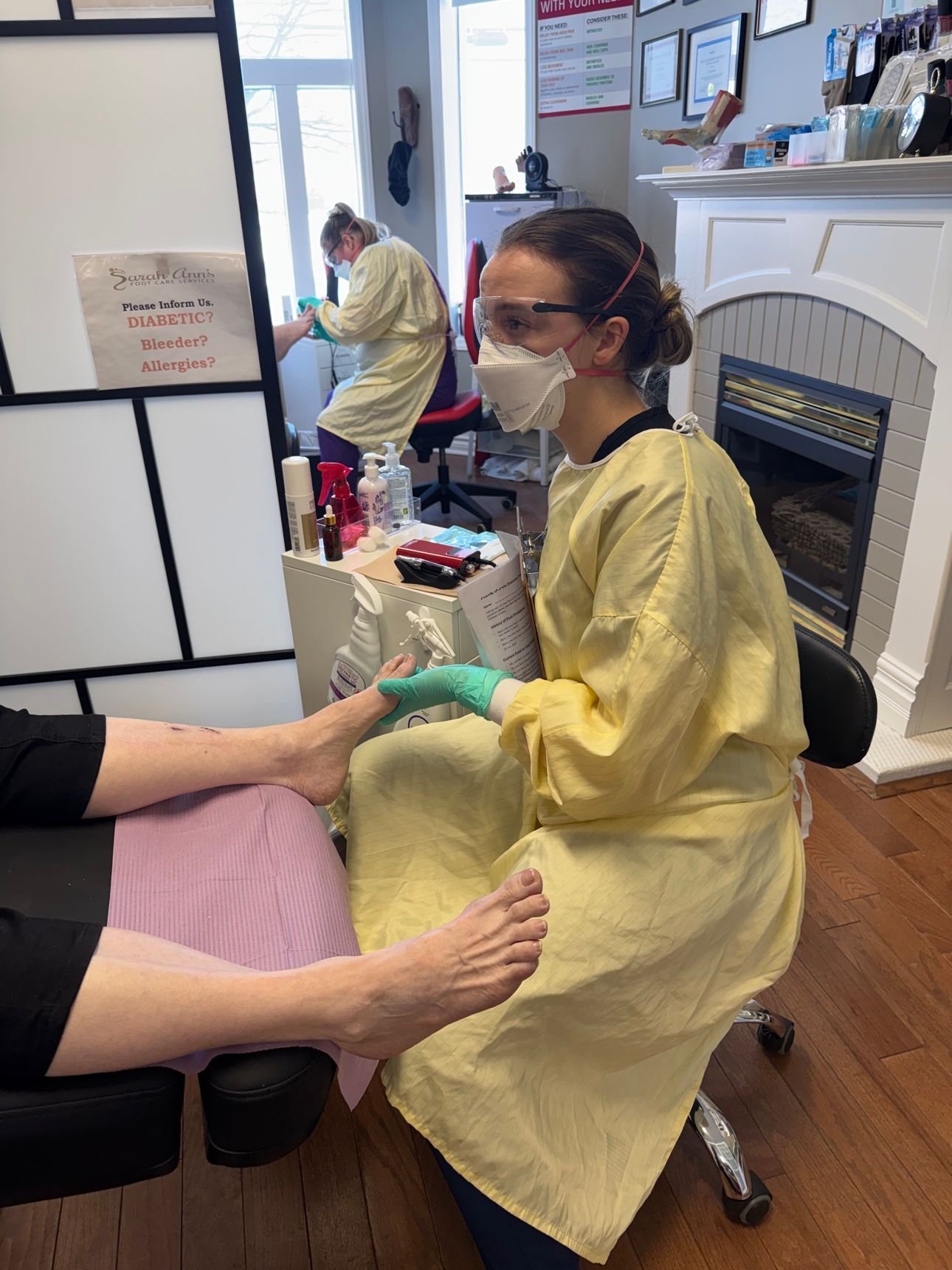
Foot care nursing is hands-on work. The theory teaches you what to know. The clinical is where you learn to trust your hands. So who is standing next to you on those days matters more than anything else on this list.
Ask for a name. Then ask how long they've been in practice. Are they still seeing patients, or do they only teach?
Here's a benchmark worth knowing. It takes about 10,000 hours to become a true expert at something. That's roughly five years of full-time work. Your educator doesn't need to be the world's leading authority. But this is going to be your bread and butter. You want someone who's put in the hours, not someone who just finished the course themselves.
What a good answer sounds like: A named educator with years in practice, still treating patients. A group small enough that they watch your hands, not the room.
Red flags: Vague answers about how long they've been in practice. An educator who can't tell you the last time they treated a patient. If the person teaching you just finished learning it themselves, that's your answer.
4. How much of the clinical is actually hands-on?
Days don't tell you much. Three clinical days could mean three days of doing or three days of watching. Ask what your hands are doing each day.
This is the heart of the course. Theory teaches you what to know. Watching teaches you what it looks like. Only doing teaches your hands. A day of watching is fine if you know it going in. It's a problem if you expected three days of hands-on and you're getting two.
What a good answer sounds like: A straight answer about what your hands are doing each day. Specifics, not adjectives.
Red flags:"Plenty of hands-on time" with no specifics attached. A clinical where you spend most of your time shadowing instead of treating or being hands-on. If the hands-on part is one day out of three, the course isn't three clinical days. It's one.
5. Is the certificate recognized — or certified?
Fair warning: this is the most confusing question on the list. Most nurses asking it don't actually know what they're asking. The right follow-up is: recognized by whom?
Here's what matters. In Canada, the curriculum standard is the CAFCN National Competency Framework. The national outline of what a foot care nurse should know. A serious program aligns with it. Veterans Affairs recognition matters too, because it means you can bill for veteran clients.
Here's what "recognized" doesn't mean. The College of Nurses doesn't approve or endorse specific courses or certifications. Their words, not mine. So if a program claims to be "CNO recognized," that's a red flag in itself.
And "accredited" is a different thing entirely. It means an outside body audited the program. Almost no foot care courses are accredited. Don't let anyone use the words interchangeably.
Certified is about you, and it's optional. The national specialty credential is the FCN(C) — Foot Care Nursing (Canada) Certification through the CNA. Portfolio-based, not an exam. No course can hand you those letters. What a good course does is prepare you to earn them.
What a good answer sounds like: Clear on all of it. "Our curriculum aligns with the CAFCN framework. Here's how our graduates pursue the FCN(C). And no, we're not CNO recognized. Nobody is."
Red flags:"Become a certified foot care nurse with our program!" with no mention of CNA or the FCN(C). Any claim of CNO recognition. If they can't name the framework, keep scrolling.
6. Is the kit required or optional?
Every foot care nurse needs instruments. The question is whether the program tells you upfront what you'll spend and when.
Some programs include the kit. Some make it mandatory at their price. Some tell you to buy your own whenever you're ready. None of those are wrong on their own. What's wrong is finding out at checkout.
What a good answer sounds like: A straight answer before you pay. "Here's what the kit costs, here's when you need it, and here's what happens if you already have instruments." A kit should be one less errand, not a surprise.
Red flags: Finding out about the kit after you've enrolled. A price that only appears on the payment page.
7. Is the business training included, or is it a second purchase?
Here's what nobody tells you at enrollment: learning to do feet is half the job. The other half is pricing, booking, forms, finding clients — the unglamorous machinery of actually getting paid.
Some programs sell these as two separate decisions. Take the clinical course now. Then decide later whether you want the business training, at a second price. Other programs include it, but only if you buy the more expensive version of the course. Same problem either way. You have to know what you want before you've started. Guess wrong and you pay twice for what could have been one course.
What a good answer sounds like: The business foundation is built into the course, not a second checkout. It's optional to complete during the course. You don't have to map your whole future before your first clinical day. And if you don't touch it, it's waiting for whenever you need it.
Red flags: A curriculum that's all foot care skills and theory with nothing about the business. Business training you can only get by making a second purchase. Business training that's only included if you buy the more expensive version.
8. What happens after graduation — am I on my own?
The course ends. Then what? This is the question midnight-you forgets to ask, because midnight-you is focused on getting in. But the weeks after graduation are when you actually need someone.
Some graduates go straight into jobs — clinics, home care companies, retirement homes. They don't need anything else, and that's fine. Others start thinking about their own practice six months or two years later, and that's when they realize the program they bought has nothing left for them.
What a good answer sounds like: The door stays open. Not a sales pitch for more courses — just an honest answer about what exists for graduates who want it later. Alumni support, a community, someone to call when you're stuck. You may never use it. Knowing it's there matters.
Red flags:"Congratulations, you've received your certificate of course completion!" followed by silence. Or a graduation email that is somehow also a sales email.
Get the printable checklist
Everything above, on one printable page. Take it to every program you're considering. One column per program, compare them side by side.
Get the free 8 Questions Guide
Ask us these same questions. Book a video chat. Bring your checklist. We'll go through it with you, no pitch.
Or take a free sneak peek inside the training — 7-day access to the actual course theory, no card required.